



Celebrating International Day of Education 2026: Harnessing the Power of Youth to Co-Create Teacher Education through Pre-STEP
By Utenwo-ojo Abraham
Education is the foundation upon which peaceful, prosperous and inclusive societies are built. Recognized by the United Nations General Assembly as a human right and a public good, the International Day of Education is observed every year on 24 January to celebrate the role of education in advancing peace and sustainable development.
The 2026 theme, “The Power of Youth in Co-creating Education,” underscores a critical shift in how education systems must evolve, recognizing young people not merely as recipients of education, but as active contributors to its design, delivery and transformation, and as key drivers of education systems that are inclusive, relevant and fit for the 21st century.
In Nigeria, this shift is increasingly visible through initiatives that not only prepare future generations to thrive, but also actively involve them in co-creating the systems that educate them. Among these is the Pre-Service Teacher Education Project (Pre-STEP), an implementation research project led by Sydani Group and CEBAR Consultancy, in collaboration with the National Commission for Colleges of Education (NCCE) and supported by the Global Partnership for Education (GPE) Knowledge and Innovation Exchange (KIX) a joint endeavour with the International Development Research Centre (IDRC). By empowering pre-service teachers, young people on the threshold of the profession, Pre-STEP positions youth as co-creators of pedagogical innovation and drivers of quality education outcomes in Nigeria.
Why International Day of Education Matters
The International Day of Education was proclaimed by the United Nations in 2018 to celebrate the transformative power of education for peace and development. It is also a call to action to ensure inclusive, equitable, and quality education for all, as envisioned by Sustainable Development Goal 4 (SDG 4). SDG 4 aims to eliminate disparities in education access, improve learning outcomes, and secure lifelong learning opportunities, objectives that cannot be achieved without well-trained, motivated and empowered teachers.
Achieving SDG 4 is impossible without well-prepared teachers who can respond to diverse learning needs. Equally critical, however, is ensuring that young people, especially future educators, have the opportunity to shape how teaching and learning are defined and delivered. As UN Secretary-General António Guterres notes in his 2026 International Day of Education message, “closing gaps in access, quality and teacher preparation is crucial to ensuring that young people everywhere can unlock their potential.
Pre-STEP: Strengthening Teacher Education in Nigeria
At the heart of sustainable education transformation lies teacher preparation. Pre-STEP was launched to tackle entrenched challenges in Nigeria’s pre-service teacher education, where training historically emphasized content knowledge but fell short on pedagogical skills, technology integration and inclusive classroom practice.
Pre-STEP’s mission is to equip pre-service teachers with the pedagogical skills, technological proficiency and reflective capacity needed for effective 21st-century teaching. Crucially, the project does not treat pre-service teachers as passive trainees, but as active agents in shaping teaching practice. Through its 4-in-1 evidence-based training model, pre-service teachers collaborate, experiment, reflect and refine instructional approaches, embodying the principle of co-creation central to the 2026 theme.
The 4-in-1 model integrates:
- Microteaching — short, practical teaching sessions with peer feedback;
- Jigsaw collaborative learning — student-centered knowledge building;
- Problem-Based Learning (PBL) — real-world problem solving;
- Technological Pedagogical Content Knowledge (TPACK) — intentional use of educational technology in instruction.
This blend of approaches bridges traditional theory with practical application, setting a new standard for teacher preparation that aligns with global goals for quality education.
Achievements: What Pre-STEP Has Delivered So Far
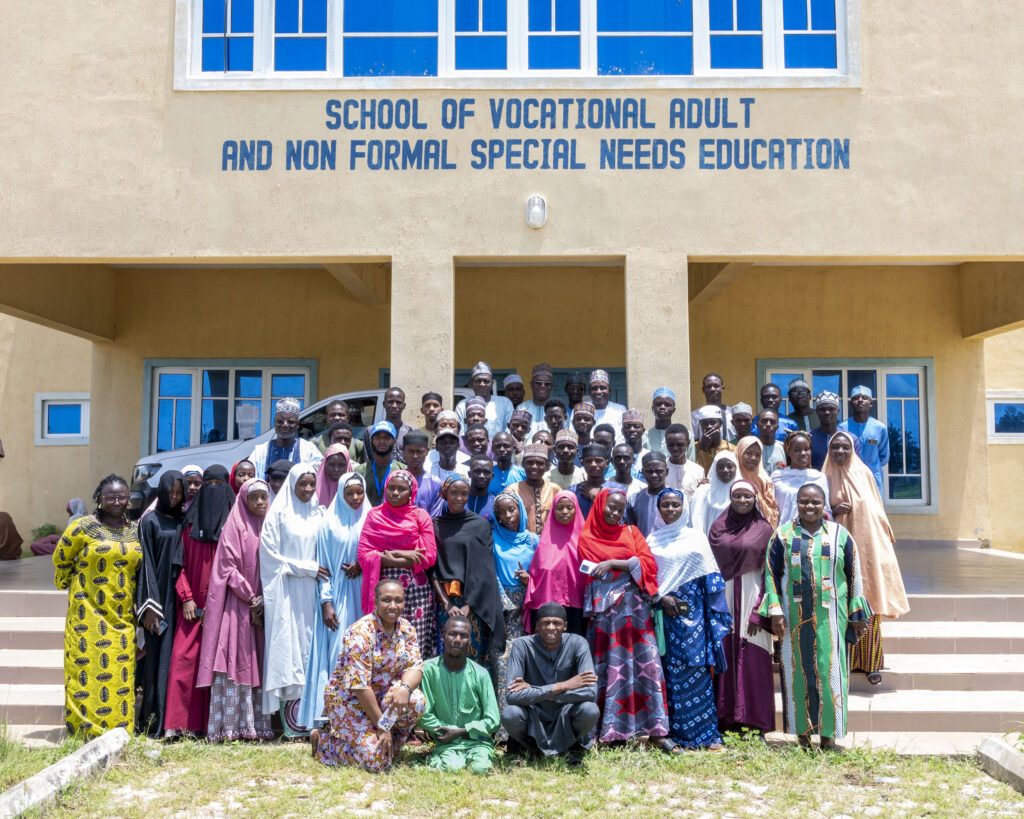
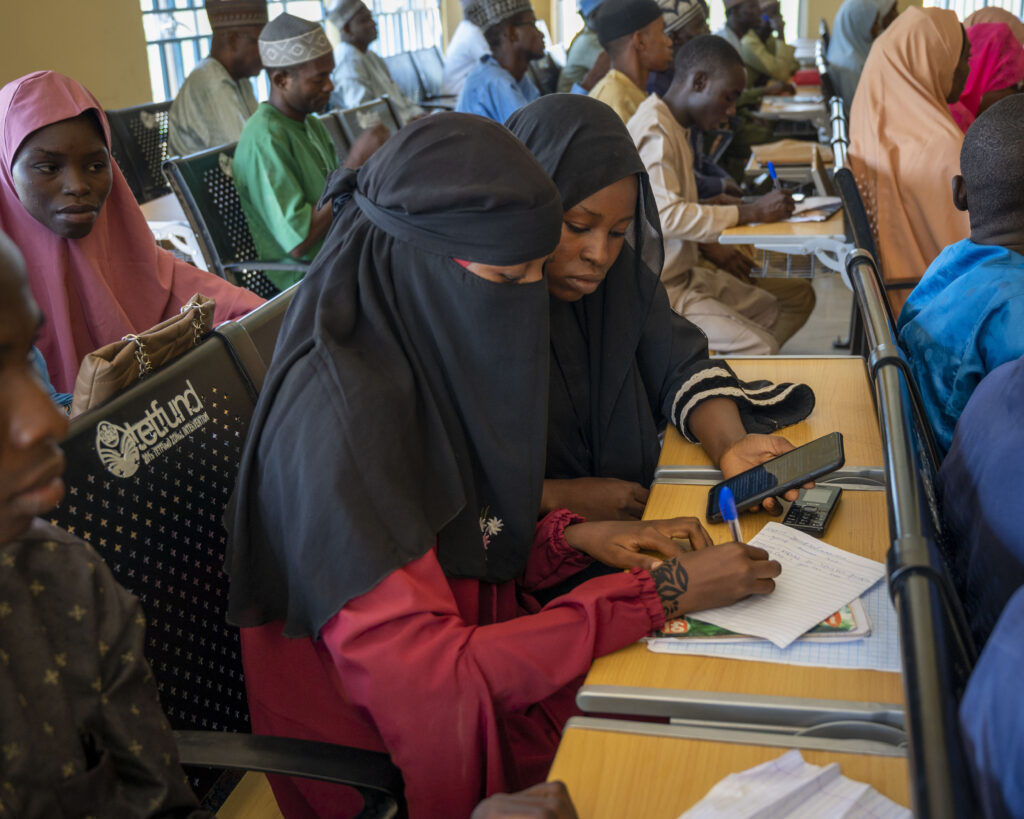
Pre-STEP has completed the first phase of implementation across six Colleges of Education strategically selected from each of Nigeria’s six geopolitical zones, ensuring diversity, representation and relevance across the country. This phase engaged over 350 pre-service teachers in the 4-in-1 model intervention group, with an equally sized control group receiving Gender-Responsive Pedagogy (GRP) training to preserve equity and research integrity.
Throughout implementation, youth collaboration, peer learning and reflective practice were central, reinforcing the idea that meaningful reform emerges when young educators contribute their insights and lived experiences to the learning process. The project upheld strong inclusion principles, ensuring participation regardless of gender, disability or background—aligning with SDG 4 and UNESCO’s vision of lifelong learning for all
The project uphelp strong inclusion principles, ensuring participation regardless of gender, disability or background, aligning with SDG 4 and UNESCO’s vision of lifelong learning opportunities for all.
How Pre-STEP Aligns with SDG 4 and International Education Goals
Pre-STEP’s design and accomplishments contribute directly to multiple targets under SDG 4:
- 4.3: Equal access to quality teacher education and training.
- 4.c: Increasing the supply of qualified teachers through evidence-based training.
- 4.5: Promoting inclusive education by ensuring equity for learners irrespective of background.
Additionally, by embedding technology-enhanced learning and inclusive pedagogies into teacher preparation, Pre-STEP advances education systems capable of navigating rapid technological transformation, which is a central theme of International Day of Education 2026, that emphasizes youth as co-creators of education. In doing so, Pre-STEP not only equips young, future educators with the skills needed, but also underscores that youth participation is not supplementary; it is essential to achieving SDG 4 in a sustainable and context-responsive way.
Looking Ahead: From Co-Creation to System Change
Completing Phase 1 marks a significant milestone, but the journey is far from over. As Pre-STEP progresses into its next phase, pre-service teachers will transition into primary school classrooms, putting their training into practice and generating valuable insights into how improved teacher preparation translates into better learning outcomes for pupils, which is the ultimate test of any education reform.
This phase will also produce deeper evidence on how blended pedagogical models can be scaled and adapted to improve teacher effectiveness nationally, contributing to policy reforms and curriculum evolution.
Conclusion
On this International Day of Education 2026, we celebrate not only access to schooling, but the power of youth to reimagine and co-create education systems that are inclusive, innovative, and resilient. Pre-STEP demonstrates that when young educators, in this case, pre-service teachers, are empowered as partners in reforms, classrooms become spaces of collaboration, critical thinking, and opportunity.
As we reflect on this day’s theme, “the power of youth in co-creating education”, Pre-STEP stands as a testament to what can be achieved when youth, educators, policymakers and development partners align behind a shared vision of quality education for all. Empowering future teachers today lays the foundation for stronger, more equitable education systems tomorrow, one teacher and one classroom at a time.
On this International Day of Education, we reaffirm our commitment to sustaining this vision and to building resilient education systems that honour the role of the youth as co-creators of a better future.
REFERENCES
- Sydani Group. (2025) Pre-STEP phase 1 complete: New era for Nigerian teacher education. https://sydani.org/pre-step-phase-1-complete-new-era-for-nigerian-teacher-education/
- UNESCO. (n.d.). International Day of Education https://www.unesco.org/en/days/education
- UN Secretary-General’s Message (2026) International Day of Education
- https://www.un.org/en/observances/education-day/messages
- United Nations. (2026). International Day of Education https://www.un.org/en/observances/education-day