



Maternal Health in Fragile Settings: Health System Failures, Financial Barriers, and Pathways to Resilience
By Ihuoma Juliet Uchechi, Sydani Institute for Research and Innovation
Fragility occurs when conflict, poverty, governance failures, climate change, and displacement permeate a community, eroding resilience and placing lives, livelihoods, and wellbeing at constant risk. In health system terms, fragility refers to the inability of health facilities to consistently deliver essential health services due to disrupted infrastructure, shortage of workforce, financing gaps, and poor coordination.
A woman in labor should typically be surrounded by skilled birth attendants, clean facilities and vital medical support. In fragile settings, a parturient is more likely to face closed health facilities, shortage of medicines, insecurity and distance to health facilities. Maternal health refers to the health of a woman during pregnancy, delivery, and the post-partum period (also known as the puerperium, lasting approximately 6 weeks or 42 days after birth). According to the World Health Organization (WHO), the average maternal mortality ratio in fragile countries is 551 deaths per 100,000 live births, which was double the world average in 2020. Fragile settings represent a convergence of political instability, weak health systems and socioeconomic vulnerabilities, making this the most challenging environment for maternal and child health delivery. Estimates show that 60% of preventable maternal deaths, 53% of under-five death and 45% of neonatal deaths are in settings of conflict, displacement and natural disaster. In 2023, fragile settings accounted for 61% of global maternal deaths. In view of these findings, it is necessary to explore some challenges faced by the maternal population in this setting and provide possible strategies for change.
Health System Failure and Maternal Health Outcomes
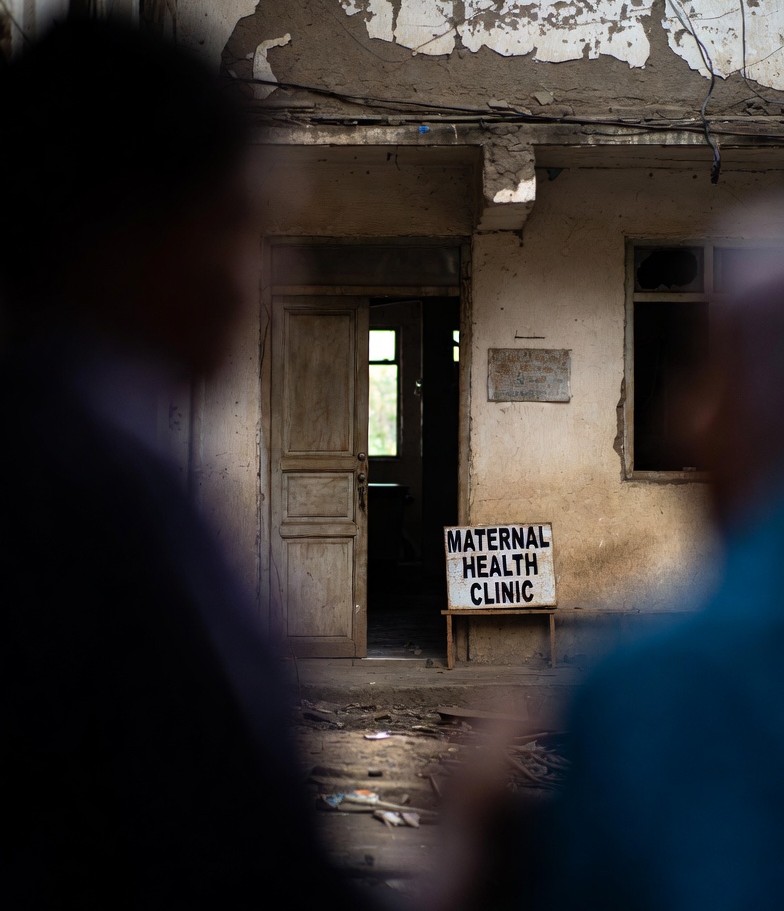
The maternal mortality crisis in fragile settings is not merely a health issue, but a reflection of systemic collapse which creates conditions where preventable deaths become routine. Health systems in fragile contexts are characterized by several challenges including health worker displacement, fragmented service delivery, limited access to care, poor regulation of health providers, weakened governance and lack of financial resources. Fragility in health systems is characterized by weakened capacity to provide essential health needs, disrupted care, shortage of work force, and poor emergency preparedness and response.
In 2021, a woman named Falmata Muhammed went into labor in Bulabilin Ngaura, where no functioning hospital was available. She and her husband attempted to reach Maiduguri, 57 kilometers away, but she began hemorrhaging and delivered a stillborn baby on the roadside. Now pregnant again, she lives in Magumeri, where the local hospital was destroyed in a Boko Haram attack in 2020 and replaced by a poorly equipped mobile clinic and is most likely to have a similar experience. Falmata Muhammed’s experience illustrates the deadly consequences of conflict-driven health system collapse in Borno State. Women in areas of conflict are at risk of experiencing shortage of health facilities and health services geographically and functionally fragmented.
Governance Failure and Systemic Failure
Systemic mismanagement is also a key factor to this problem. It is expected that budgetary allocations be made for primary health care centers (PHC) to ensure the maintenance and development of functioning PHC. However, these expected budgets are often reallocated and PHCs are left unattended to. A typical example is the Gindiri Public Health Care (PHC) facility, the abandonment of this PHC project weakens the legal obligations outlined in the National Health Act, which stipulates the right of all Nigerians to basic minimum healthcare services. When there are limited available PHCs, there are cases of avoidable maternal and neonatal mortality due to overcrowded PHCs. Across Nigeria, many PHCs meant to serve vulnerable communities remain incomplete, poorly equipped, or entirely abandoned. These facilities, which were meant to provide essential medical services, now symbolize failed governance and wasted public resources.
Financial Barriers
Beyond Infrastructural problems, financial constraint is also a key source of maternal and neonatal mortality. In states where there is notable distance to the healthcare facility, women may choose not to spend money on transportation instead of household needs. Beyond transportation costs, 63% of Nigerian women face out-of-pocket payments for maternal services, with antenatal care averaging ₦5,000 per visit according to the National Bureau of Statistics. This forces many pregnant women to choose between essential healthcare and basic household needs, particularly in northern states where poverty rates exceed 70%. In 2019, Nigeria implemented the Basic Health Care Provision Fund (BHCPF), established under Section 11 of the National Health Act (2014), to strengthen health sector financing. The BHCPF was designed to fund the Basic Minimum Package of Health Services (BMPHS), expand access to essential primary healthcare, and reduce out-of-pocket spending, particularly for vulnerable populations such as pregnant women and children. Consequently, six years into implementation, investigation shows that the hospitals in fragile areas turn away desperate mothers due to funding delays by the government, and bureaucratic identity requirements. The lack of consistent free antenatal care, safe delivery options, and post-natal service due to lapses from BHCPF, affects neonatal health as well.
Intervention Strategies
Preserving maternal health in fragile settings requires coordinated strategies that address health system weakness, socioeconomic barriers, and government failures. Firstly, it is important to strengthen Primary health centers by completing and rehabilitating abandoned health facilities, equipping them with essential resources and enhancing referral system in emergency obstetric and neonatal care. The Government should dedicate designated funding and ensure accountability at all government levels to prevent diversion of PHC budgets by implementing budget tracking systems, internal audits, and community level monitoring to the vulnerable population.
Health insurance should also be prioritized for the maternal population and cover maternal and neonatal services, including antenatal care, delivery, post-natal care, and newborn immunization, and should be clearly communicated to communities to restore trust in public health services. While low literacy and lack of trust in government programs may deter this intervention, community heads and traditional leaders can help educate and encourage community to engage in these programs, highlighting relevance and reliability. Health sensitization and community engagement should be carried out in areas where lack of education and ignorance is a factor that influence access to health care services, it is essential to address cultural barriers, increase birth preparedness and promote health seeking behaviors. Also, efforts should be made to increase health funding mechanisms and ensure that they are easily accessible with timely disbursement of funds to ensure that PHCs deliver services
Furthermore, it is important to deploy, protect and incentivize skilled birth workers with incentive packages that include hazard allowance, housing, social support and ensuring strict security and humanitarian agencies to protect especially in conflict-affected areas to encourage and enable them more willing to serve undeserved communities.
Additionally, mHealth also has the potential to compliment physical systems though it cannot replace facilities or skilled birth attendants. In addition to promoting health education among patients and reducing waiting times and costs of healthcare, mHealth enhances patient support, providing a system for emergency response and monitoring. mHealth can help mitigate the problem of transportation costs and access to healthcare facilities in conflict-based areas. However, in high conflict areas, mhealth would be supportive rather than transformative, and feasibility constraints may be encountered such as poor network stability and electricity. In this case, deployment of low bandwidth, low-cost digital devices designed for resource constrained environments with long lasting batteries, ability to function offline, and preloaded audio and visual instructions can be considered.
In conclusion, maternal mortality in fragile settings is preventable, and its prevalence reflects socioeconomic and governance failures rather than inevitability. Strengthening primary healthcare, ensuring reliable financing, protecting health workers, and empowering communities are not optional, discretionary; they are policy core necessities. With sustained political will, coordinated partnerships, and community engagement, fragile settings can build resilient health systems that safeguard maternal and health and support long-term development.