


The Psychological Impact of Climate Change: Eco anxiety, Eco Paralysis and Solastalgia
By IHUOMA JULIET UCHECHI, Sydani Institute for Research and Innovation
Climate change is no longer an abstract threat. It is widely recognized as one of the most pressing global challenges of the 21st century, with consequences that extend beyond the physical environment into social, economic, and psychological domains. Climate change refers to the long-term changes in the average weather patterns that characterize the earth’s local, regional and global climates 1. While it was initially part of Earth’s natural system, anthropogenic activities have been the primary cause of climate change, primarily due to greenhouse gas emissions influenced by the use of fossil fuels.
Globally, a total of 605 extreme weather events were recorded in 2024, displacing about 824,500 people. In Sub-Saharan Africa, WHO reports that the occurrence of widespread flooding has affected more than 4 million people and caused extensive damage. Across Nigeria, large parts of the North experienced prolonged dry spells and heat stress, even while some areas experienced flooding simultaneously- a definitive sign of climate change. These events reflect a broader global climatic shift and generate profound economic, physical, and mental health consequences. While the physical and economic impacts have been extensively examined, its psychological toll remains comparatively underexplored. Emerging evidence highlights a growing burden of climate-related psychological distress, often referred to as psychoterratic conditions. The term psychoterratic, coined by Glenn Albrecht, describes the psychological responses humans experience in relation to environmental change and degradation.
Climate change and Psychoterratic Health
Climate change affects mental health through both direct and indirect pathways. A global pooled analysis by Chique et al. indicates a high likelihood of psychological impairment following exposure to extreme weather events. Direct exposure to floods, droughts, heatwaves, and wildfires has been associated with posttraumatic stress disorder (PTSD), depression, and anxiety. Indirectly, climate change undermines mental well-being through gradual environmental degradation, food insecurity, loss of livelihoods, forced migration, and pervasive uncertainty about the future.
This article emphasizes these indirect pathways, which give rise to emerging psychoterratic conditions that are less visible but highly consequential. Although emerging research supports the existence of these conditions, there remain uncertainties regarding their long-term trajectories, diagnostic criteria and cultural variability.term trajectories,
EcoAnxiety: Fear of an Uncertain Environmental Future
The most studied emotional distress response to climate change is ‘Eco Anxiety’. The American Psychological Association defines it as ‘a chronic fear of environmental fate’. This type of anxiety refers to the anticipation of future problems or potential threats and is associated with worry, distress, autonomic and somatic modifications.
Recent estimates suggest that persistent and heightened levels of climate anxiety negatively impact daily life function in 21–27% of adults and 38–45% of children and young adults4. While eco-anxiety is associated with heightened awareness, worry, and emotional distress about the future of the environment, these persistent states of concern can evolve over time into a deep sense of psychological immobilization. Climate change anxiety may undermine the ability to react and cause feelings of helplessness and hopelessness. A 2022 survey by SustyVibes found that 66.5% of Nigerian youths reported experiencing symptoms of eco-anxiety, including fear for the future, hopelessness, and distress linked to environmental conditions.5 The main triggers were concern about the future and direct experience of climate change and environmental degradation. Nearly half of the respondents (46%) reported needing support to cope, indicating a significant gap in mental health interventions for climate-related distress. In Anambra State, repeated unprecedented flooding led to the loss of crops, homes, and properties. This generated a lot of stigma and anxiety among the community, and many young people contemplated suicide.
EcoParalysis: When Anxiety Turns into Inaction
For some people, fear and uncertainty become overwhelming and individuals perceive their actions as insignificant against the magnitude of the climate crisis, anxiety may shift into a maladaptive psychological state known as ‘Eco paralysis’. It is a passive state of behavioral stasis, characterized by depression, excessive anxiety, hopelessness, and apathy. Ecoparalysis occurs when individuals perceive the climate crisis as too broad for personal or collective efforts to make a change, leading to disengagement rather than action. This condition represents a pivotal point where concern no longer motivates Pro Environmental Behaviors (PEBs) but instead, suppresses it. paralysis occurs when individuals perceive the climate crisis as too
In Lagos State, rising sea levels and coastal erosion have steadily washed away homes, fishing boats and even ancestral grave sites. Despite pledges of support from Commonwealth leaders, worsening ocean surges have left the centuries-old community feeling powerless, with residents fearing their ancestral land could soon be lost to the sea, according to local chief Abimbola Iyowun.
Solastalgia: Grieving Environmental Loss in Place
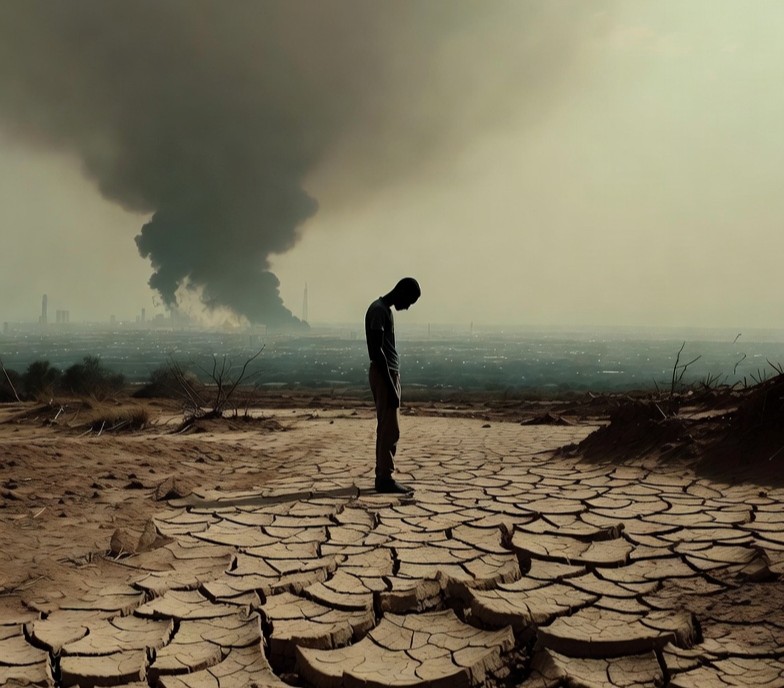
While eco-anxiety and eco-paralysis are largely future-oriented and influenced by anticipation, uncertainty and perceived powerlessness, Glenn Albrecht coined a neologism in 2003 to describe the emotional imposition of climate change grounded in lived experiences. The term “Solastalgia” refers to the distress and isolation caused by the gradual removal of solace from the present state of one’s home environment. Solastalgia is also known as climate grief, associated with mourning what has already been lost. In Nigeria, Solastalgia is observed in communities affected by desertification especially in the North. For the longest time, these communities have depended on stable land for grazing and cultural identity, however, the progressive advancement of the Sahara, deforestation and decline in rainfall have transformed fertile lands to unproductive terrain. The residents now experience a profound feeling of distress, grief and emotional displacement watching a place once called “home” no longer provide the same comfort. Such emotional consequences are particularly acute among indigenous populations, farmers, and others whose identities and livelihoods are tightly linked to the ecosystem.
The mental health impacts of climate change are unevenly distributed across populations. Psychological effects are disproportionately experienced by certain groups, including women, young people, individuals from lower socioeconomic backgrounds, and those whose livelihoods depend directly on the ecosystem, such as farmers. Eco psychological distress is particularly concerning due to its high comorbidity with other mental health disorders and its wide range of psychosocial impacts. This psychological distress can sometimes co-occur with clinical conditions such as generalized anxiety disorder (GAD), PTSD and somatic symptom disorder. These overlapping disorders can intensify emotional dysregulation. For individuals, solastalgia has been described as having the potential to increase alcohol and illicit substance consumption and reliance on social support, which have embedded reductions in positive connections to family and interpersonal relationships.
Strategies to Address the Psychological Burden of Climate Change
Rising climate-related ecological distress implies that awareness alone is insufficient to protect mental well-being. Addressing psychoterratic conditions requires integrating mental health into climate mitigation and adaptation strategies. A growing body of research suggests that strengthening hope, resilience, optimism, and self-efficacy can buffer against climate-related distress. This can be implemented through organizing workshops focused on resilience training, programs that teach coping skills like realistic optimism and cognitive reframing, where people can acknowledge climate challenges, map out actionable solutions and track the impact of these solutions. Also, mental health services can be embedded within disaster preparedness and response frameworks to ensure timely support or affected population as soon as climate-induced natural disasters occur. Climate-positive actions can serve as a therapeutic role to mitigate behaviors . Such actions include environmental volunteering and exposure to ecoinnovations to reduce feelings of helplessness, increase optimism, and improve psychological well-being. Embedding mental health services within disaster preparedness and response actions further ensures timely support for affected populations. Efficacy can buffer against climaterelated distress. positive actions innovations
Specifically, cognitive-behavioral interventions and psychological frameworks play a crucial role in facilitating individual and community-based behavioral modifications toward more sustainable practices. Community-based actions can also help to reduce the risk of psychoterratic conditions, such as support groups, community engagement, and cultural healing practices.
Climate Action Must Include Mental Health
In conclusion, addressing the mental health impacts of climate change requires an organized framework that integrates psychological support with environmental action. There remains an essential need for sustained research to identify more context-specific, culturally responsive, and scalable intervention strategies that have been tested and proven effective against these conditions, as well as for strong policy frameworks that institutionalize mental health. Climate policy without mental health integration is incomplete.
Policymakers, practitioners, and researchers must recognize psychoterratic health as a core component of climate response. Investing in climate-informed mental healthcare, promoting emotional literacy, and embedding psychological support within adaptation and disaster response strategies are no longer optional; they are essential. Informed mental healthcare, promoting emotional literacy, and embedding psychological support within adaptation and disaster response strategies are no longer optional